
I had not appreciated the extent to which life changed for Europeans during the middle ages.
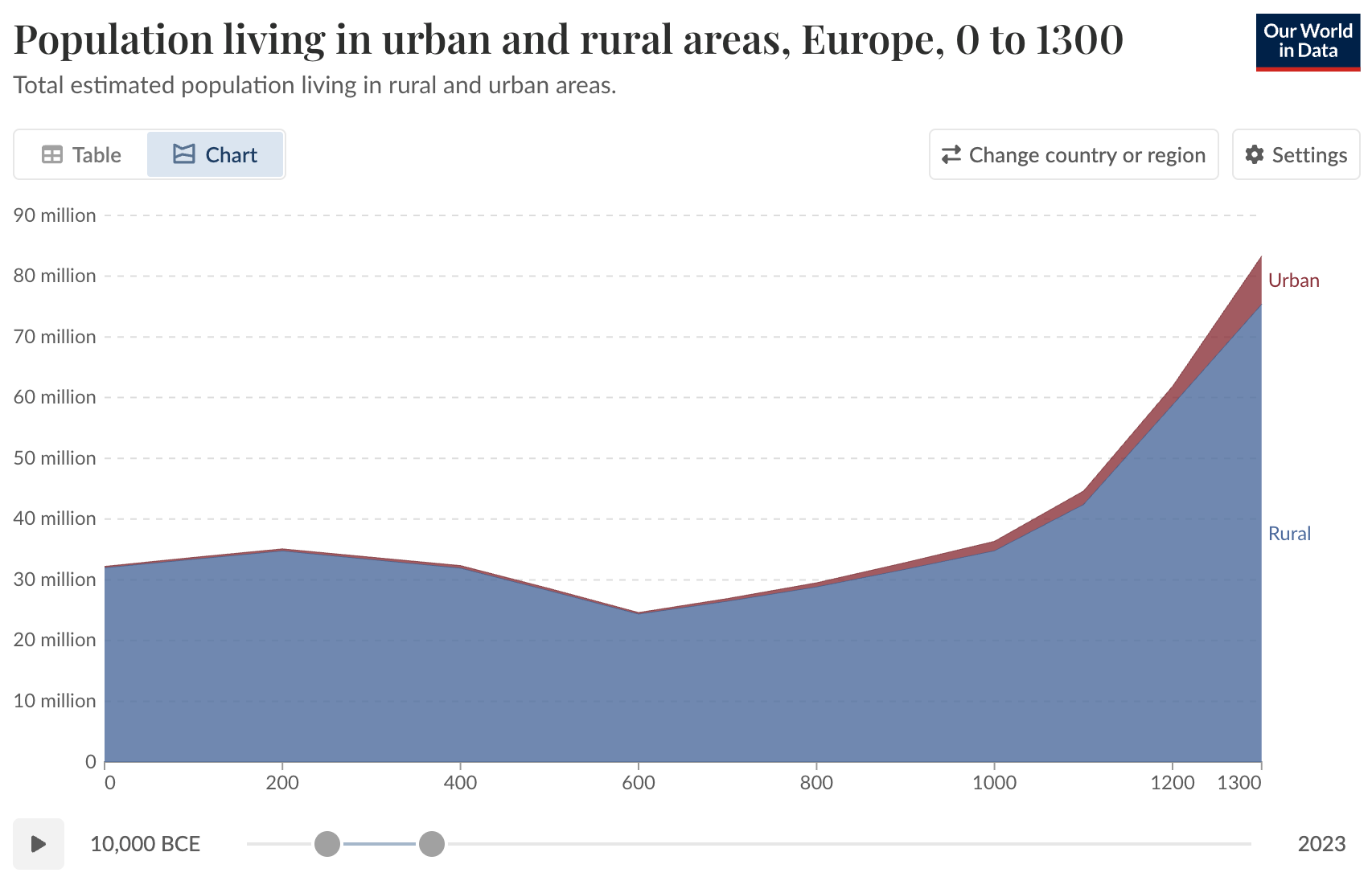
Between say 800 and 1300, the number of Europeans tripled. And the percent of people living in towns went from 2%→8%.
Much of this social change was driven - if not in full, then at least in significant part - by the development of new technology1.
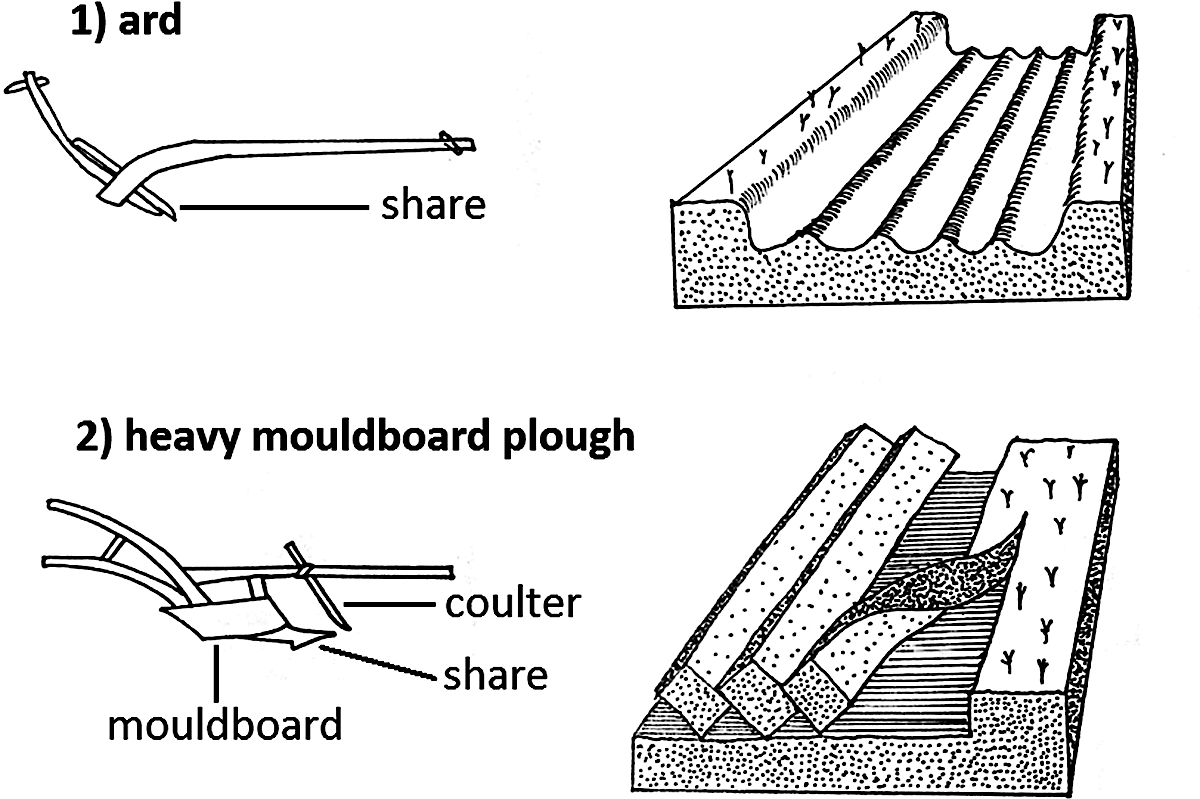
The diffusion of the heavy plough between 800-1000 allowed for easier farming in climates with heavy, wet soil. But 6-8 oxen were required to pull a heavy plow, which was far more than a typical peasant owned. Higher capital needs helped drive village nucleation and tilling in adjacent strips of land rather than in isolated hamlets.
The adoption of metal horseshoes in the ~900s greatly increased the usefulness of horses, which had a variety of effects. My favorite of these was described as follows:
The ox moved so slowly that peasants using oxen had to live close to their fields. With the employment of the horse both for ploughing and for hauling, the same amount of time spent going to and from the fields would enable the peasant to travel a much greater distance… Even a slight increase in the distance which it was convenient to travel from the village to the farthest field would greatly enlarge the total arable which could be exploited from that village. Thus extensive regions once scattered with tiny hamlets came to be cultivated wilderness dominated by huge villages…which in architecture and even in mode of life became astonishingly urban2.
This horse-driven-agglomeration is particularly striking to me, because it’s like an inverse mirror of what was to come with the automobile: When people got horses they moved in to the villages, but as people got cars they moved out to the suburbs.
Heavy armor and the stirrup were adopted between 700-1000, which helped enable an entirely new kind of horse-mounted soldier: the knight. An appropriately skilled and armored knight required a high level of investment: A lifetime of training, advanced weaponry and armor, the best horses. So “a gulf appeared between a warrior aristocracy and the mass of peasants.”
—
I by no means want to imply that the technologies listed above were the only factors in social changes in the middle ages. Other institutional, religious, climatic, and demographic factors were obviously also at play.
But technology definitely had an important effect, and in ways that can be hard to predict and take years to play out. It’s not obvious ahead of time that horses would contribute to the development of villages, and that the plow would drive collectivization.
And it’s worth keeping in mind that medieval technological (and social) changes were tiny compared to those to come with the industrial revolution.
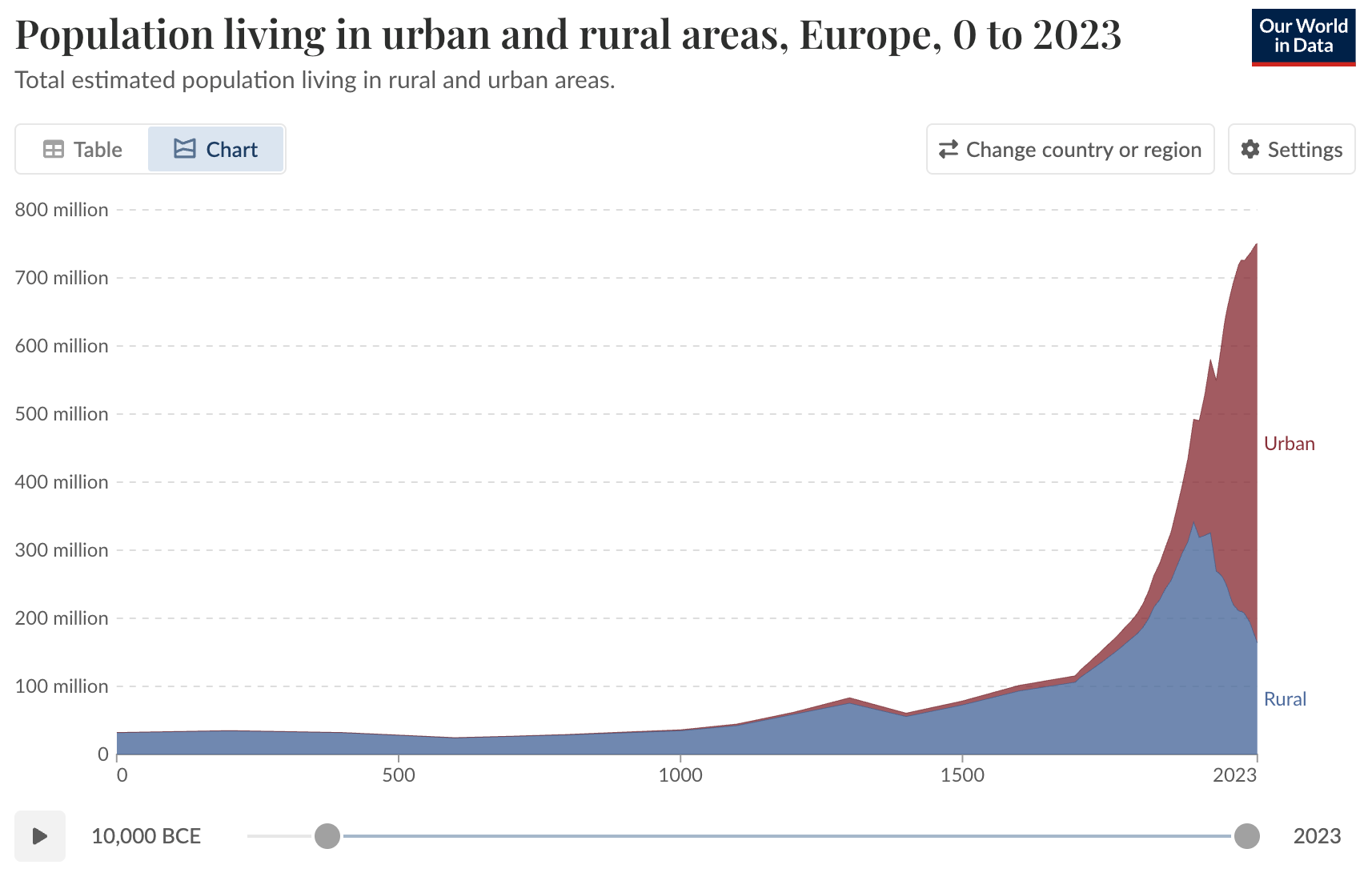
With that perspective, medieval Europe looks technologically and socially static. But in reality, it wasn’t, and history never is. We never reach equilibrium.
Right now we are in the midst of3 an AI boom, and look to be accelerating faster than ever. It may just be continual technological and social change from here on out. And our descendents in 200 years might live with a pace of change so fast that our own era may appear almost static by comparison.
Basically everything here comes from Lynn' White’s excellent Medieval Technology and Social Change
From White, cited above.
The other impacts of horses include more farming of cash crops (transport costs went down by as much as 70%) and better nutrition (driven by a ~30% increase in plowing productivity)
At the beginning of?