

London, 1623. Lack of work in the countryside has driven you to London. Opportunities here seem scarcely better. You awake desperate for work each day — on a good day you earn a shilling ferrying water. You fear one day you will fail to pay your weekly rent and will be whipped and sent home as a vagrant.
You have heard of a land across the ocean where work is plentiful. But passage there costs 5 pounds (100 shillings) - an impossible sum.
Then you meet a man offering you a deal: he offers you transport to the new world, as well as food and lodging once you arrive. In return, you will work for 7 years, unpaid. At the end of the term, you will be free to go and find your own work in any of the short-handed farms and workshops in America.
The deal isn’t great, but it beats a whipping and endless hunger. So you sign up to be an indentured servant.
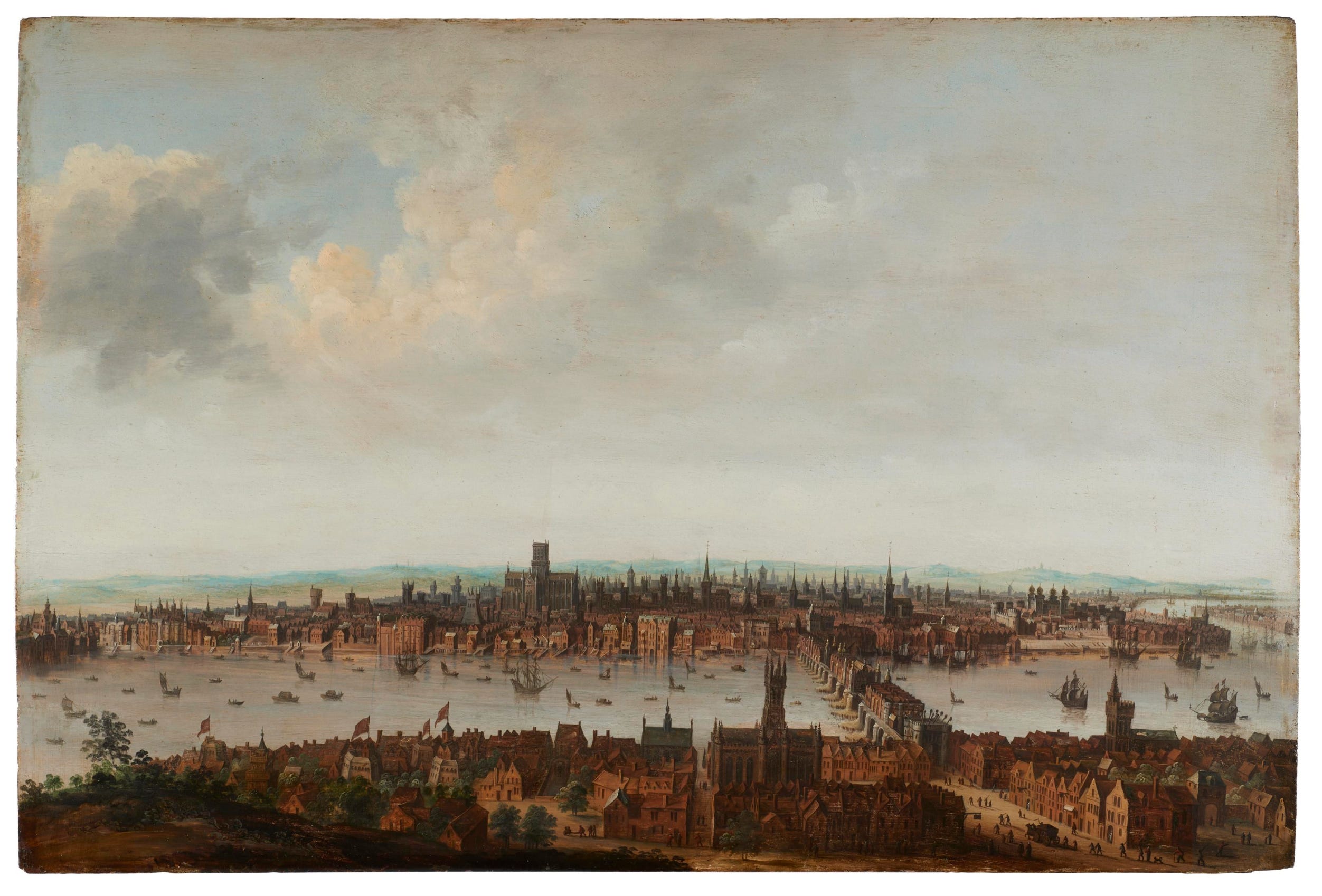
Indentured servitude’s American roots run deeper than the Revolutionary War. For 200-odd years, indentures bridged the Atlantic for poor Europeans, imperfectly solving the severe mismatch in labor supply between the old and new worlds. Rife with abuse, but also a ladder to opportunity, indentured servitude is an important part of the American story.
It also pops up occasionally in contemporary discussions as an unflattering comparison to our current immigration arrangements: Most recently, J.D. Vance used the term to refer to foreign national workers at Microsoft.
Today we will take a 5,000-foot overview of the history of indentured servitude in America. Later I will have a follow-up post directly comparing and contrasting indentured servitude to modern-day pathways into the US.
What was indentured servitude?
If you ran an agricultural or industrial enterprise in the 13 colonies, you had a variety of labor arrangements at your disposal. You and your household could do the work directly. You could hire free wage workers. You could take advantage of that old dishonorable institution of slavery, still available to you for the next century or two. Or you could hire an indentured servant.
In the American context, an indentured servant meant someone who gave up their freedom and worked under a master for a fixed term (typically 4-7 years), in exchange for free travel to the new world plus room, board, and clothing.
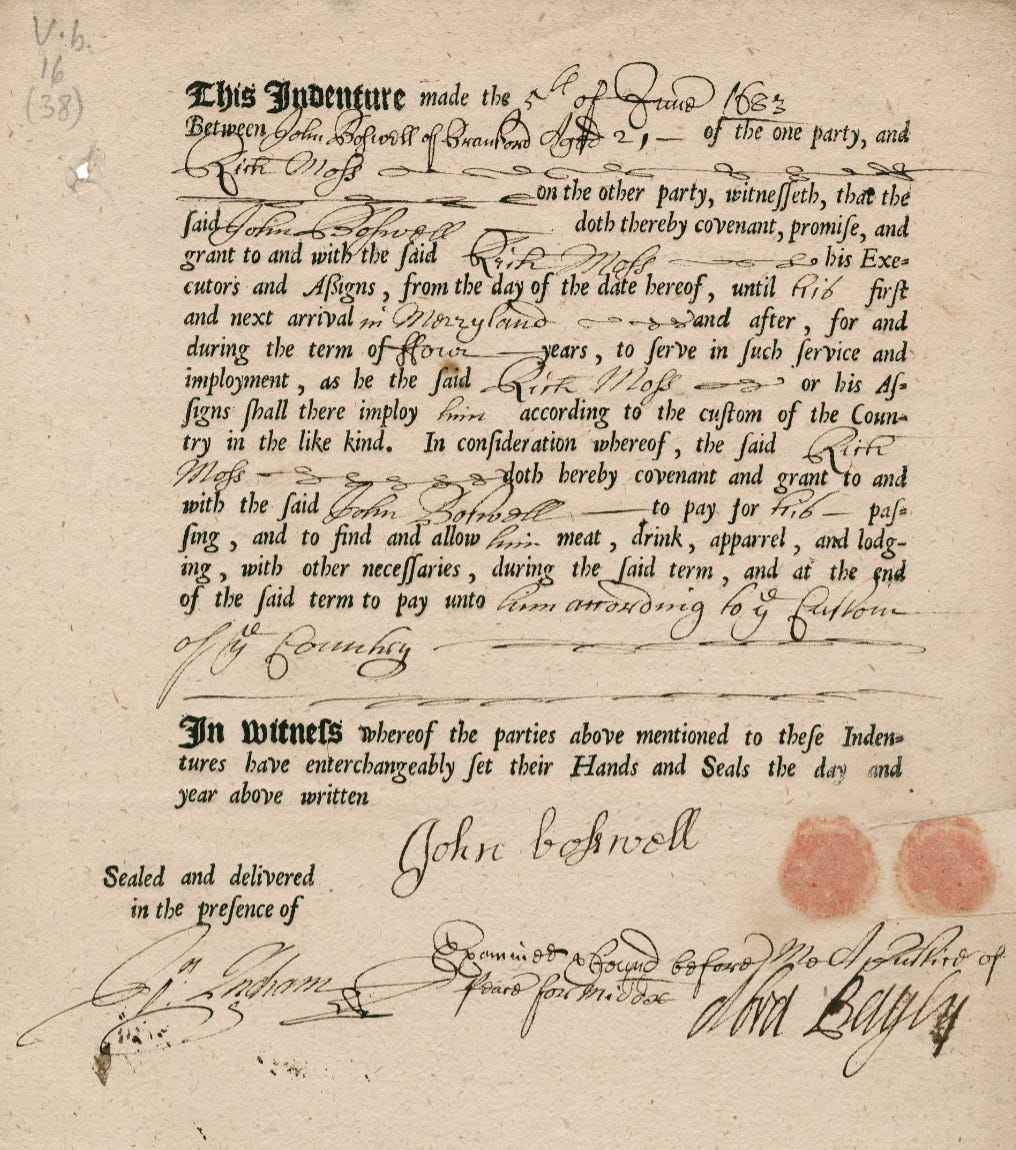
The typical indentured servant in the American context came from England, Ireland, or Germany. They usually worked without pay in hard labor on the farm, or in a skilled trade such as masonry, carpentry, or smithing.
An important distinction between indentured servitude and slavery was that indentured servitude was a temporary status, rather than a permanent caste.
Indentures acted essentially as a migration-finance device - and were quite common. It is estimated that around half the free laborers coming to the 13 colonies came via indentured servitude. Many of them made something of themselves after paying off their indentures. In fact, one of the signers of the Declaration of Independence - George Taylor - originally came to the US as an indentured servant.
Room for abuse
As you would (unfortunately) expect - being bound to a master created ample opportunity for abuse. This is one of the reasons indentured servitude has a bad name — its use as a comparison point to modern immigration arrangements is not intended to be flattering.
Indentured servants were frequently subject to physical punishment, and could be whipped if they fled their masters.
However, to place indentured servitude in its proper context: It is worth keeping in mind here that, unfortunately, corporal punishment was not unusual across the different labor modalities at the time. The patriarch of a household could beat his children, wife, apprentices, non-indentured servants, and - of course - slaves.
Even when masters were not cruel, indentured servants faced unfreedoms that would grate on any of us today: Contracts were transferable by the master’s initiative only, meaning the servant could be transferred without their permission. Indentured servants couldn’t marry without the master’s permission, and women who gave birth while under indenture had their indentures lengthened. They could not vote or sit on juries.
In fact, indentured servants themselves were not exactly happy about these arrangements. See for example this report from Reverend Muhlenberg, head of the German Lutheran Church in Pennsylvania, about a German servant he purchased in 1751:
At first he was very happy because he received good food, drink, and clothing in my house and had no hard work to do. He had hardly been with me for nine months, however, being hindered in his movements outside the house and being required to attend morning and evening prayers when I was at home, when he could no longer endure his good fortune and became surly and unruly.
I too would be surly if my employer could control my movements and compel me to attend morning and evening prayers. Muhlenberg ended up selling the servant at a 23% loss1.
The end of indentured servitude
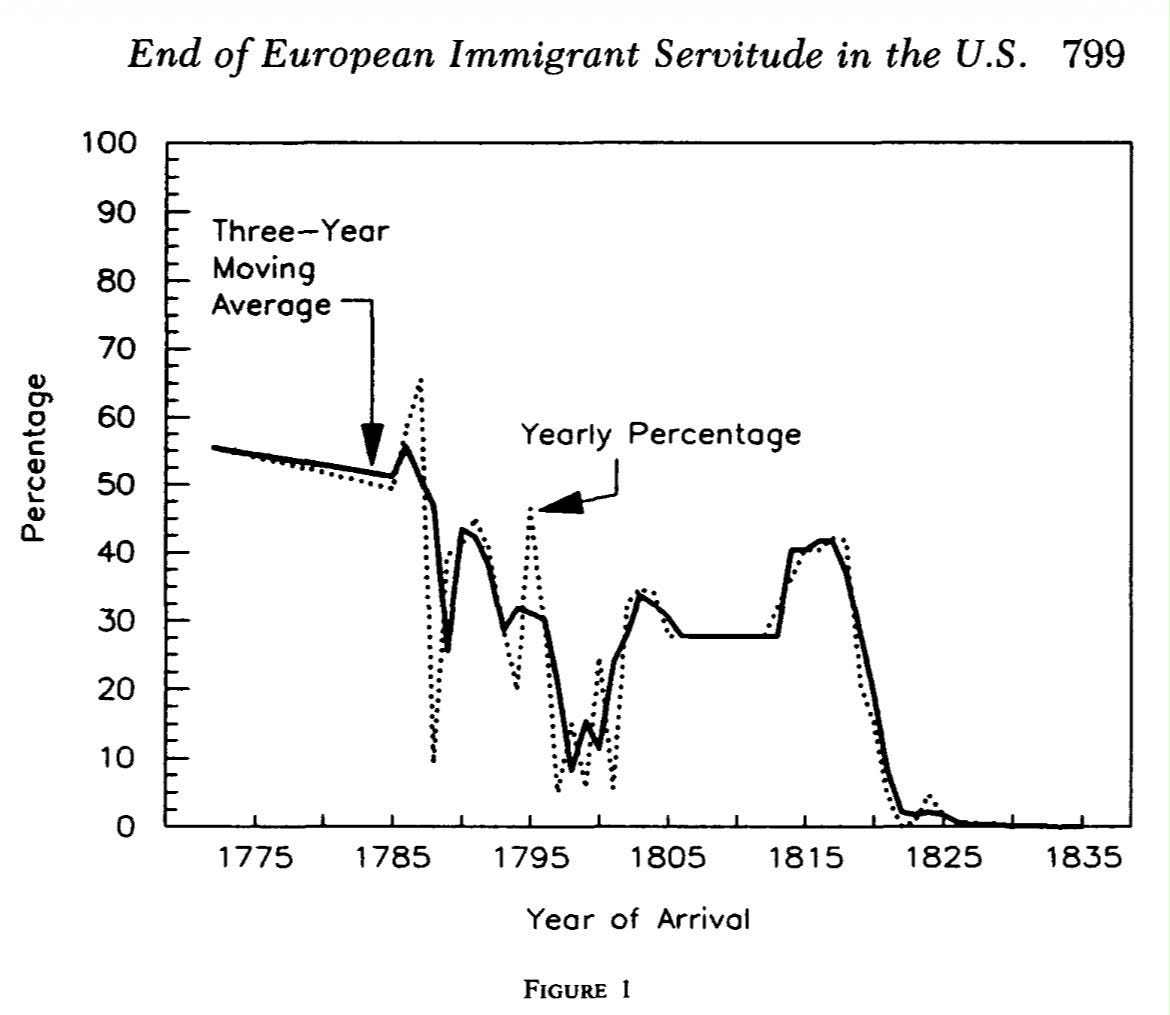
The use of indentured servitude decreased over the course of the 1700s, and terminated almost entirely in 1820.
This happened essentially in two waves: During the first wave in the 1700s, African slaves replaced indentured servants in unskilled field labor required to cultivate crops like tobacco and rice - partially because indentured servants didn’t put up with ill treatment and harsh labor in these environments. Unlike slavery, indentured servitude did at least require that the bonded individual opt into the arrangement ahead of time.
But for a time, indentured servants were still recruited for skilled positions. A request for European laborers to move to Jamaica at the time demonstrates this shift:
Indent for us any Wrights, Masons, Coopers, Smiths, Carpenters, or Millwrights we doe not want any other than Tradesmen at this time . . . . minde to Send none but tradesmen for they are not worth sending any other.2
But indentured servitude in skilled trades too ended fairly abruptly in 1820, seemingly because the arrangement was no longer the best option for Europeans seeking to migrate to the US.
The economist Farley Grubb demonstrates that the early 1800s saw migration shift from indenture-based to remittance-based financing. By 1820, there were enough German-American families in the US who were willing and able to send money back to family in Germany for transport.
This seems like a positive development. The people who otherwise would have enrolled into indentured servitude instead opted for more informal partnerships within families. This is not to say that family-based labor couldn’t be abusive, but the revealed preference of migrants shows that they at least thought that migrating with family was preferable to remaining in indentured servitude.
Conclusion: How should we think about indentured servitude?
Societies with access to low-cost labor afford themselves the opportunity to produce cheap goods and services. At different times, this hunger for a low-cost workforce has manifested in different ways. In the late 1900s, developing countries like China were able to take advantage of a demographic dividend of a large, young, domestic labor force to drive their development.
In America, much of the demand for cheap labor has been met by importing workers, with varying levels of coercion. Indentured servitude was the first step in this chain which has continued to this day.
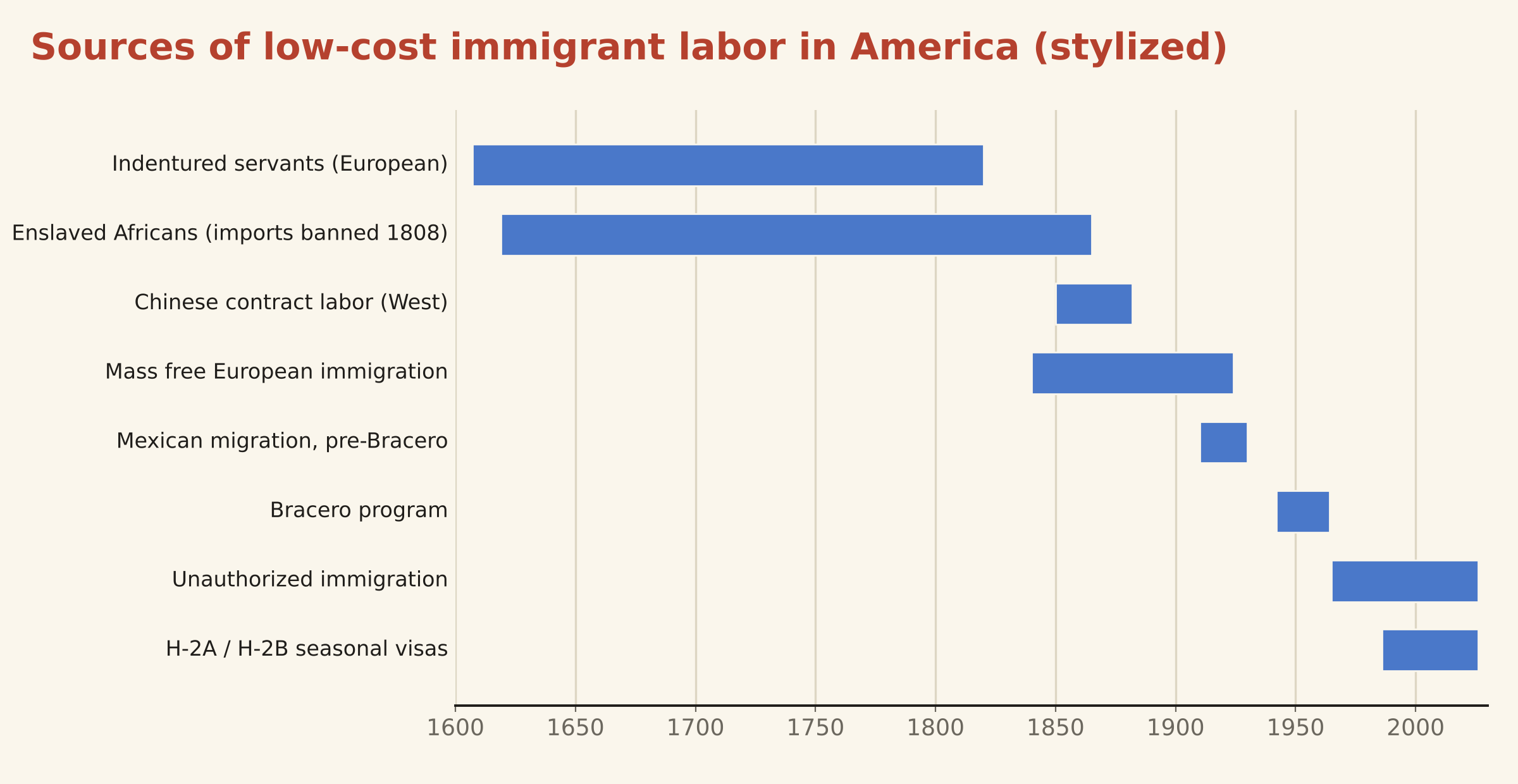
With the clear exception of slavery, migrants are generally willing and eager participants in moving to the US. However exploitative institutions like indentured servitude may be, year after year migrants clearly chose indentured servitude, estimating that their chances with a master in the new world would be better than their odds at home.
All the same, we can take some comfort in the fact that, as progress has taken its course, a path to the US no longer requires literally selling oneself into bondage.
—
Thank you for Andrew Miller for comments on this post, and to JD Vance for providing the impetus to learn more about the topic.
This anecdote comes from Farley Grubb’s The End of European Immigrant Servitude in the United States.
From D.W. Galenson’s White Servitude and the Growth of Black Slavery in Colonial America