
It’s fun to think about what a government is trying to say about itself through the design of its capital city.
I spent 5 days in Beijing in July, and was in Washington DC last weekend. Seeing the two back-to-back made certain contrasts stand out.
Architectural persuasion
Beijing and DC both have grand architecture, impressing you with the power of the state. Viewing the grandeur of the capitol or the forbidden city is to witness a visceral argument: “We are in power.”
But in architectural terms, the source of that power’s legitimacy is framed very differently in Beijing vs. DC.
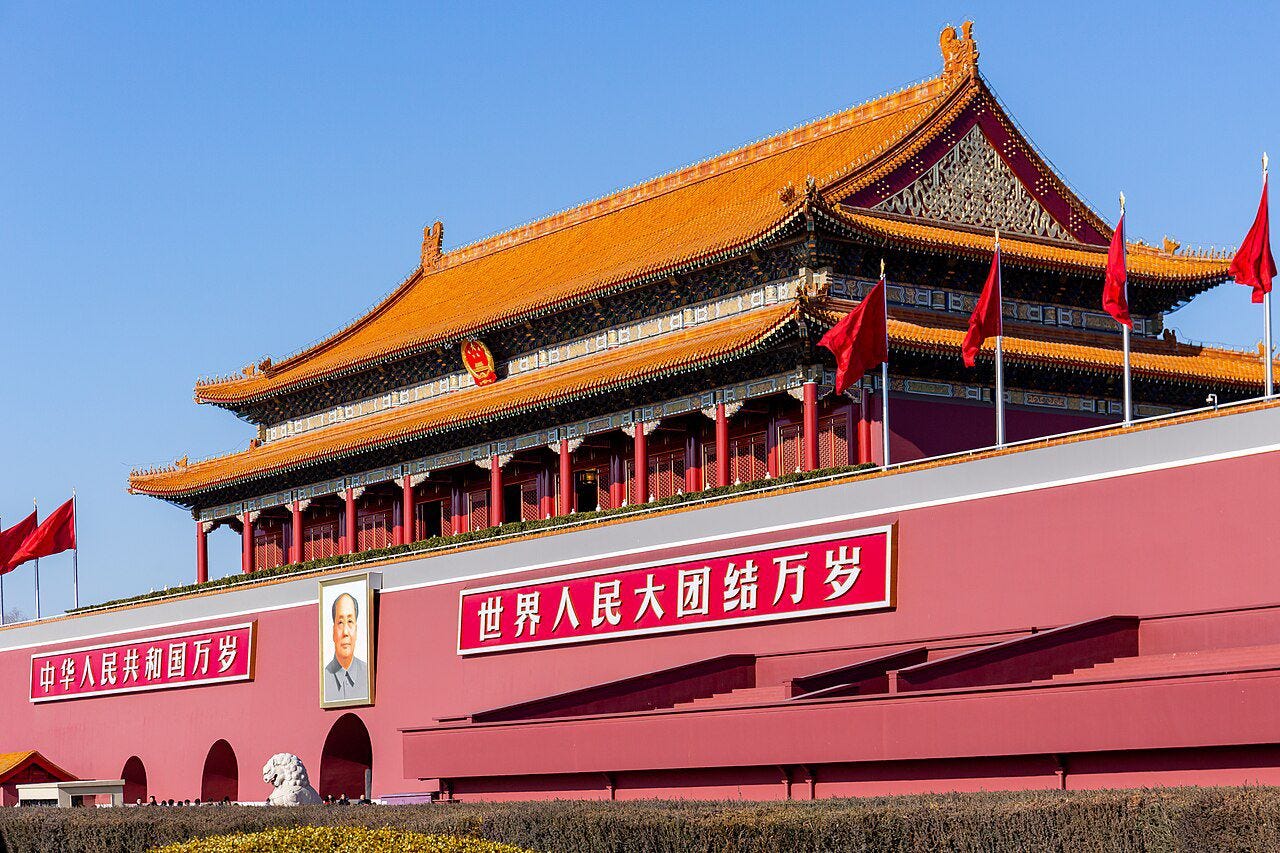
The center of Beijing is the forbidden city and Tiananmen, an ancient heavenly gate. Just south of Tiananmen is Mao’s Mausoleum.
China has a long and illustrious history of incredible cultural achievements. The people chose Mao and the communist party to lead them, thus conferring on the CCP the legitimacy of the thousands of yeas of Chinese history.
The visual image of this linkage is the enormous picture of the Chairman that sits on Tiananmen itself.
The argument for governmental legitimacy goes: “The CCP is has been chosen by the people, assumed the mandate of heaven, and will continue the glory of Chinese civilization.”
Compared to China, the US is an infant nation. In the US, legitimacy comes less from a long historical tradition, and more from the grand ideals of democracy and freedom.
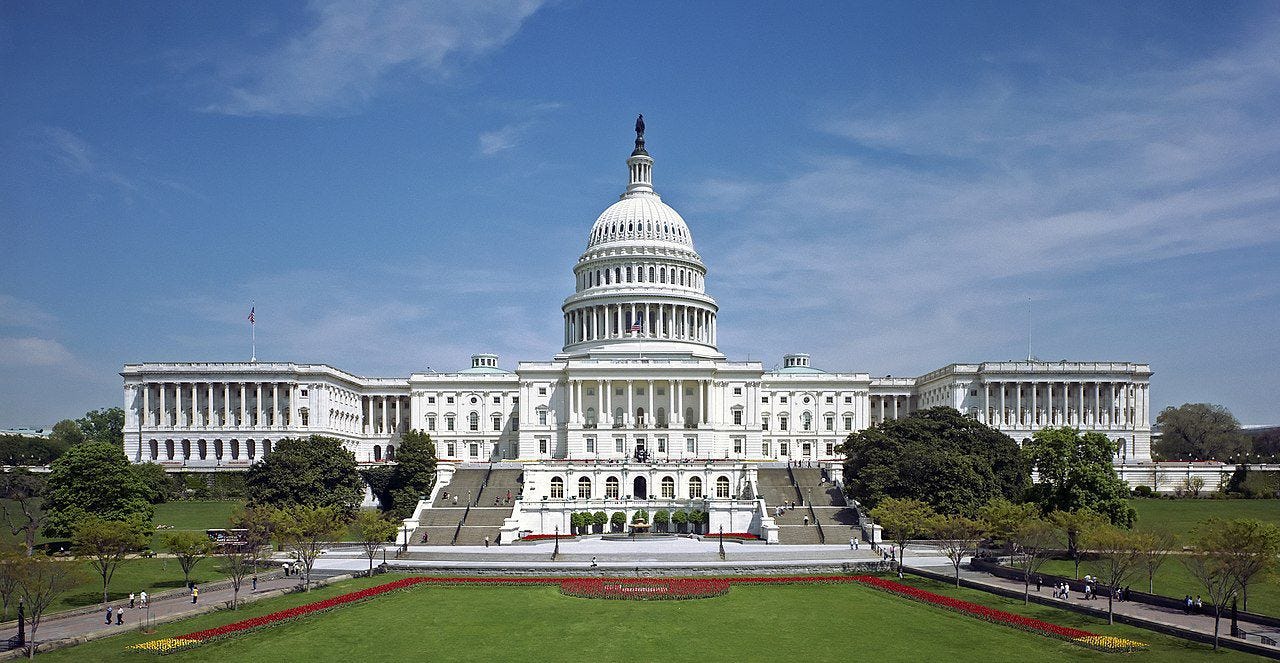
The center of Washington DC is the capitol building. The very locus of democratic government - where democracy actually happens. Classical and grand, its very design is a statement: legitimacy flows from democracy, not dynasty.
“America stands for democracy, freedom, and participatory government.”
The stories told in museums
Chinese history is told as a single long thread. Beginning with Emperor Yao and running up until the present, the Chinese museums tells a story of the Chinese people through 5000 years and over 30 dynasties. At every exhibit you follow this thread from dynasty to dynasty, seeing how Chinese culture, institutions, and technology have evolved as the civilizational story of China is spooled out over the centuries.
American history is the weaving together of many short threads. The American History Museum had exhibits on the revolutionary war, the civil rights movement, experiences of various immigrant groups. You’re allowed to sit with a tapestry of different colors and textures: sometimes fitting tightly, sometimes frayed, but generally becoming stronger and more durable over time.
Harmony vs dissent
DC was full of protest art against the current government. No Kings. Free DC.
You don’t see this kind of public expression in Beijing. I found it notable that you have to go through a security check to get to Tiananmen Square, while you can just want right onto the National Mall in DC.
—
The US is young and values freedom and diversity. China is old and values harmony and order.
These are obviously the most common stereotypes about the US and China. And of course, when you are a tourist, to some extent you see what you expect to see.
What struck me most was how deliberately each government shapes these impressions.
In both places, propaganda isn’t just in posters—it’s built into the city itself.